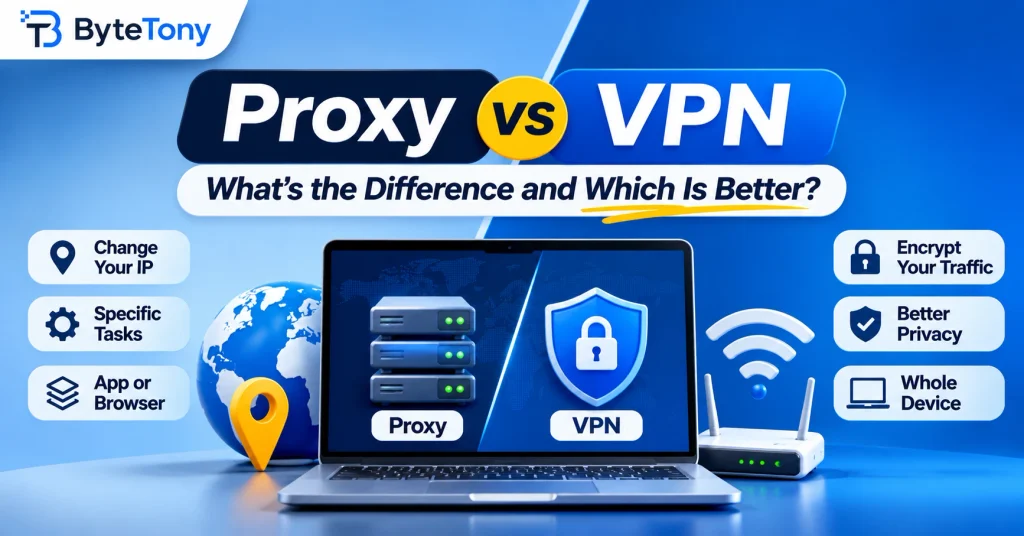
Proxy vs VPN: which is better? A proxy routes selected internet traffic through another server to change your visible IP address. A VPN encrypts traffic between your device and a VPN server. For everyday privacy and security, a trustworthy VPN is usually better. For location-based SEO checks and specific IP-switching tasks, a proxy can be more practical.
Affiliate disclosure: This article contains affiliate links. If you purchase through them, ByteTony may earn a commission at no extra cost to you.
Table of Contents
Proxy vs VPN: The Key Differences
Here’s how the two compare.
| Feature | Proxy | VPN |
|---|---|---|
| Encryption | Depends on proxy type and configuration | Encrypted tunnel to VPN server |
| Coverage | Configured apps or browser; sometimes device-wide | Usually the whole device |
| Hides your IP | For traffic routed through the proxy | For traffic routed through the VPN |
| Privacy from Wi-Fi/ISP | Depends on encryption and HTTPS | VPN-routed traffic is encrypted |
| Speed | Depends on proxy quality and location | Depends on server and protocol |
| Cost | Free or paid, often per IP or bandwidth | Free plans or paid subscriptions |
| Best for | SEO checks, location testing and specialized tools | Everyday privacy and public Wi-Fi |
Proxy: A proxy acts as an intermediary between your application and the internet. Standard proxies don’t automatically encrypt all your traffic, although some support encrypted connections. HTTPS still protects the contents of your connection to a website.
VPN: A VPN creates an encrypted tunnel to its server, helping prevent your local network or ISP from seeing the websites you access through that tunnel. Most consumer VPNs protect device-wide traffic, although features like split tunneling can exclude selected apps.
Neither option makes you completely anonymous. You’re also trusting the proxy or VPN provider with some information about your connections.
When Is a Proxy Enough?
A proxy is useful when you need to change your apparent IP address for a specific task rather than protect all your browsing.
Common uses include:
- Checking how websites, ads or search results appear in another country.
- Monitoring local SEO rankings and SERP results.
- Using compatible tools for permitted data collection and website testing.
- Testing location-based content without changing your entire device’s connection.
However, avoid unknown public proxies for sensitive activities. A 2018 NDSS study found malicious or unwanted content modifications in 5.15% of the working open HTTP proxies tested.
When Should You Choose a Paid Proxy?
A paid proxy makes more sense when you need specific locations, reliable connections, rotating IP addresses or a stable IP for repeated tasks.
Proxy-Seller offers residential, ISP, datacenter and mobile proxies. These can be useful for location-based SEO checks, website testing and compatible research tools.
Proxy-Seller promo code: BYTETONY15
Enter the code at checkout and verify any applicable discount before purchasing.
For details about pricing, setup and limitations, read our Proxy-Seller Review for Beginners. If your main goal is tracking Google rankings, see our comparison of the 7 Best Proxies for Rank Tracking & SERP Checks.
Remember that a paid proxy doesn’t automatically provide the same privacy protection as a VPN.
When Should You Use a VPN?
A VPN is generally the better choice when protecting your connection is more important than selecting a particular IP address.
Consider a VPN when:
- Using public Wi-Fi in cafés, airports or hotels.
- Handling work accounts or sensitive information.
- Reducing what your ISP or local network can observe about your browsing.
- Protecting traffic from multiple applications without configuring separate proxies.
For a paid option, NordVPN offers encrypted VPN connections and additional features such as split tunneling on supported devices.
A VPN doesn’t replace HTTPS, antivirus protection or strong passwords. Use ByteTony’s free Password Generator to create unique passwords for your accounts.
My Recommendation
For most beginners, choose a reputable VPN with a clear privacy policy and independently audited no-logs claims. A VPN is more convenient for everyday privacy and protecting your connection on public networks.
If you only need occasional VPN protection, a trustworthy free plan may be sufficient. Our Free VPN vs Paid VPN guide explains when upgrading is worth the cost.
Choose a paid proxy only when you have a specific requirement, such as geographic testing, automated SEO checks or compatible data collection. Don’t pay for proxy infrastructure if your existing tools already handle these tasks.
FAQ
Does a proxy hide your IP address?
Yes, websites generally see the proxy’s IP address for traffic routed through it. However, your proxy provider can still identify your connection, and other applications may continue using your regular IP address.
Can you use a proxy and a VPN together?
Yes. You can configure an application to use a proxy while your VPN is active. However, this adds complexity and may reduce speed. Most beginners don’t need both.
Are proxies and VPNs legal?
Both are generally legal in many countries, but restrictions vary by location. Always follow applicable laws, privacy requirements and website terms of service.
Conclusion
Choose a VPN for everyday privacy, especially on public Wi-Fi. Choose a proxy for specific IP-switching tasks, local SEO research and compatible automation tools.
The better option depends on what you need to accomplish—not simply which service costs less.
Enjoyed this guide? Support ByteTony and help us create more simple, beginner-friendly tech guides.
☕ Support ByteTony